Client: Product, Web & Growth Since: August 2026 Content: Blog in English, German, French, Spanish and Italian
A language app built end to end — product, platform, funnel and the content engine behind it
From an idea to a live product with a funnel and a five-language content engine behind it
Moroccan Arabic is spoken by tens of millions of people and taught almost nowhere. Darija is not Modern Standard Arabic — the language schools and apps teach is not the language anyone actually speaks in Casablanca — so a learner who wants to talk to their own family ends up with courses that miss by a mile. The market gap is obvious. The build is not: a language product is not a website with lessons bolted on, it is an app, a learning method, a payment system, an onboarding flow, and a reason for anyone to arrive in the first place. All of that had to exist before a single learner could be charged €4.99, and it had to work in a market where the competition is Duolingo.
M73LAB built the whole thing, from the plan to the posts. The positioning came first — Moroccan Darija as it is actually spoken, learnable in 30 days, free to start — and everything else was built to serve it. The product is a Next.js web app with its own learning system: an assessment that places a learner, spaced-repetition flashcards, a dictionary, grammar, listening and speaking practice, and a dashboard that tracks the streak. Payments run through Stripe behind a free tier, so the funnel starts at zero and converts on the method rather than on a paywall. Around the product sits the part most language apps skip: a blog engine publishing in five languages — English, German, French, Spanish and Italian — so that someone searching for travel phrases for Morocco in any of them lands on the product. The whole thing is built as an installable app rather than a website you have to remember to visit: added to the home screen it launches standalone, straight into the dashboard, with its own icon and no browser chrome — which for a product that depends on somebody showing up daily for 30 days is the difference between a habit and a bookmark. And the Instagram account runs the same system in short form, one lesson per post.
Darija as it is really spoken, learnable in 30 days, free to start — the promise everything else had to serve.
A daily word count small enough to keep, with spaced repetition doing the remembering.
Assessment, flashcards, dictionary, grammar, practice and a dashboard, built as one app.
A free tier that proves the method, then Stripe checkout at €4.99.
A blog publishing in five languages, so search finds the product in each of them.
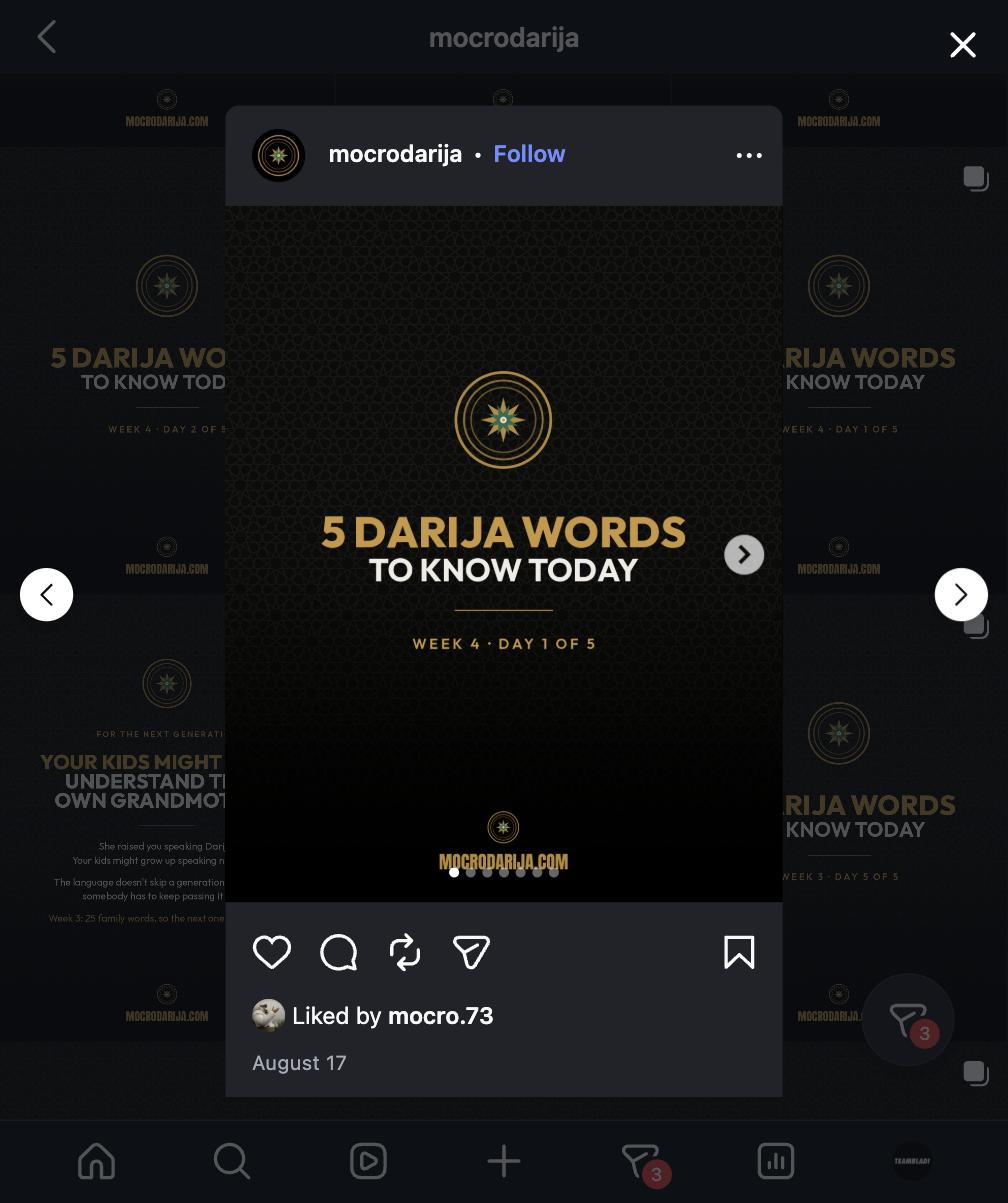
Instagram running the same lessons in short form, one idea per post.
Positioning, naming direction and the 30-day product promise defined before the build
Full web app designed and built — assessment, flashcards, dictionary, grammar, practice, speaking and a learner dashboard
Free tier into a €4.99 subscription, with Stripe checkout and the whole payment flow
Onboarding that places a learner by level, goal and pace instead of starting everyone at zero
A blog engine publishing in five languages: English, German, French, Spanish and Italian
Instagram set up and run as the short-form arm of the same lesson system
Installable as a real app: added to the home screen it opens standalone at the dashboard, with its own icon and no browser bar
A dark, gold-accented product site that has to do two jobs at once: convince someone in a few seconds that this is the Arabic their family actually speaks, and get them into the app without a payment wall in the way. The primary action is the free start; everything else is secondary to it.
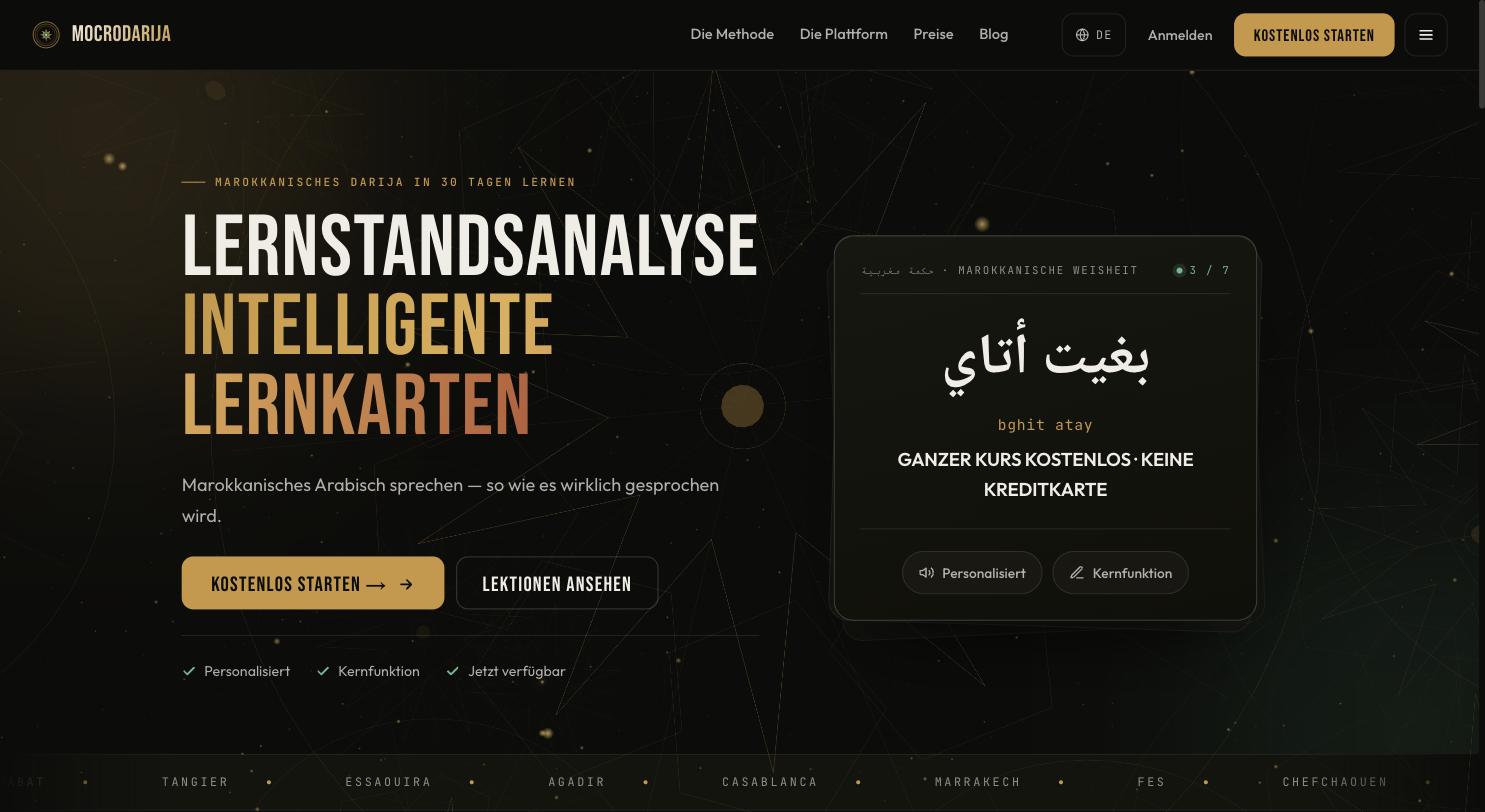
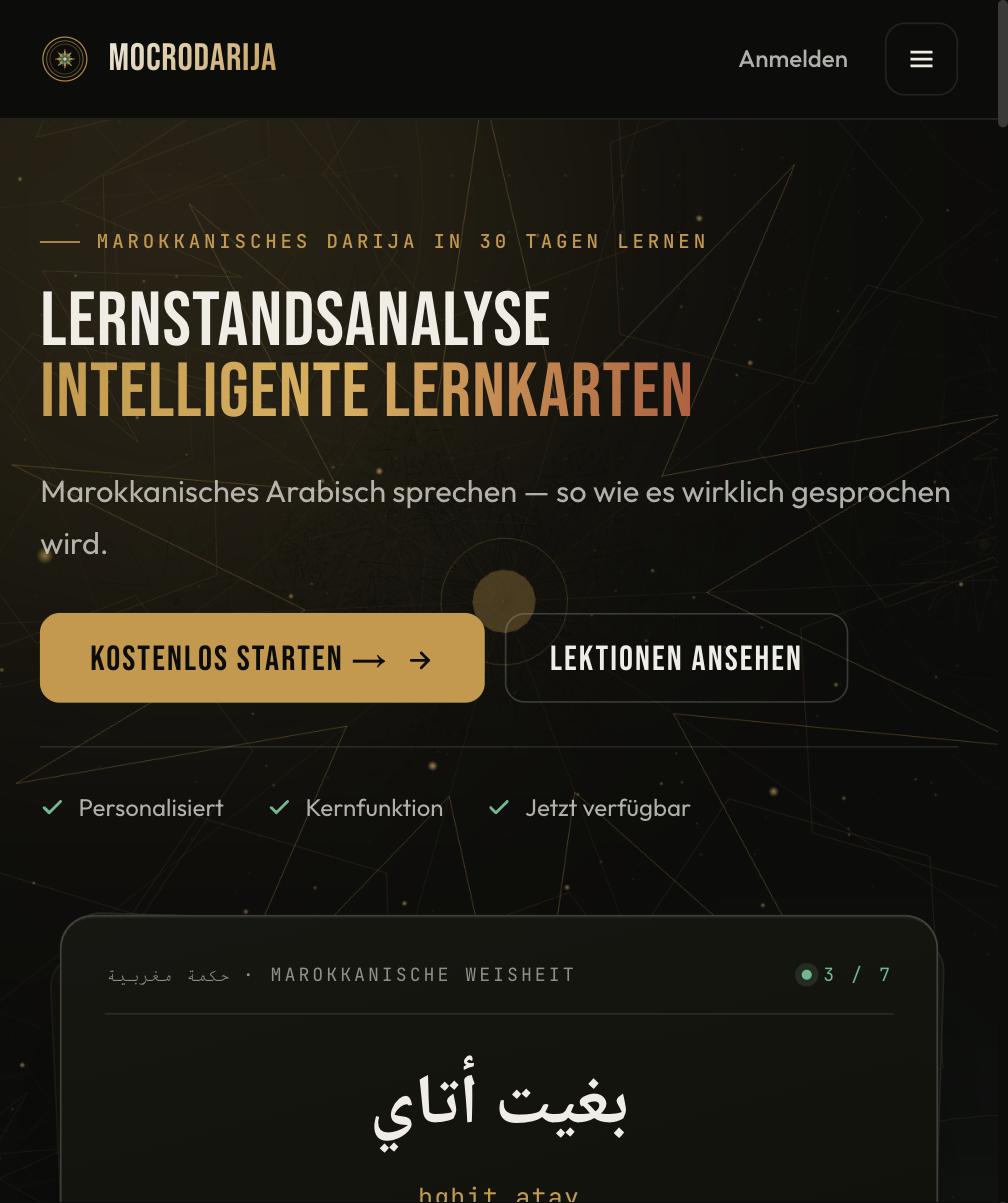
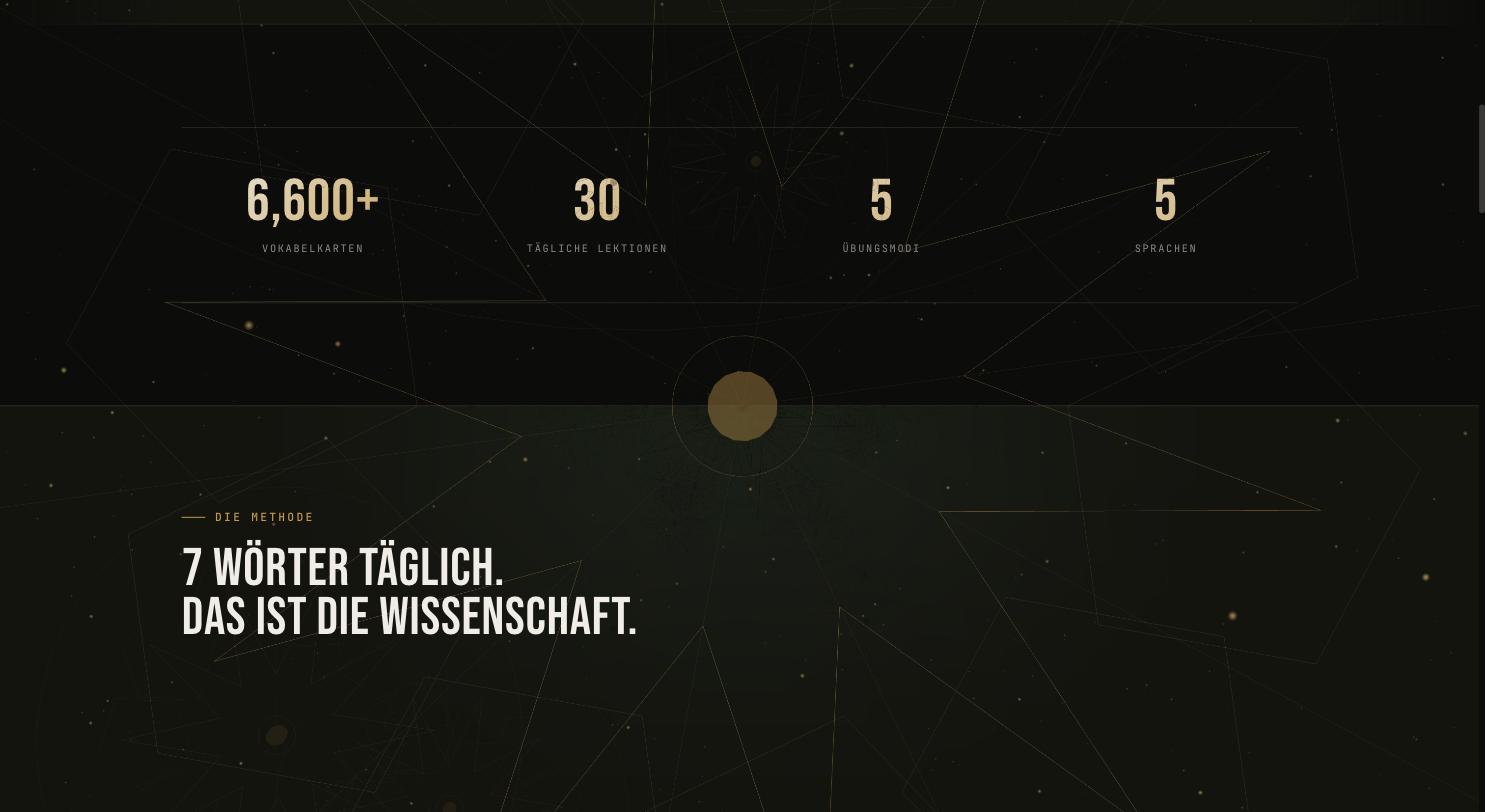
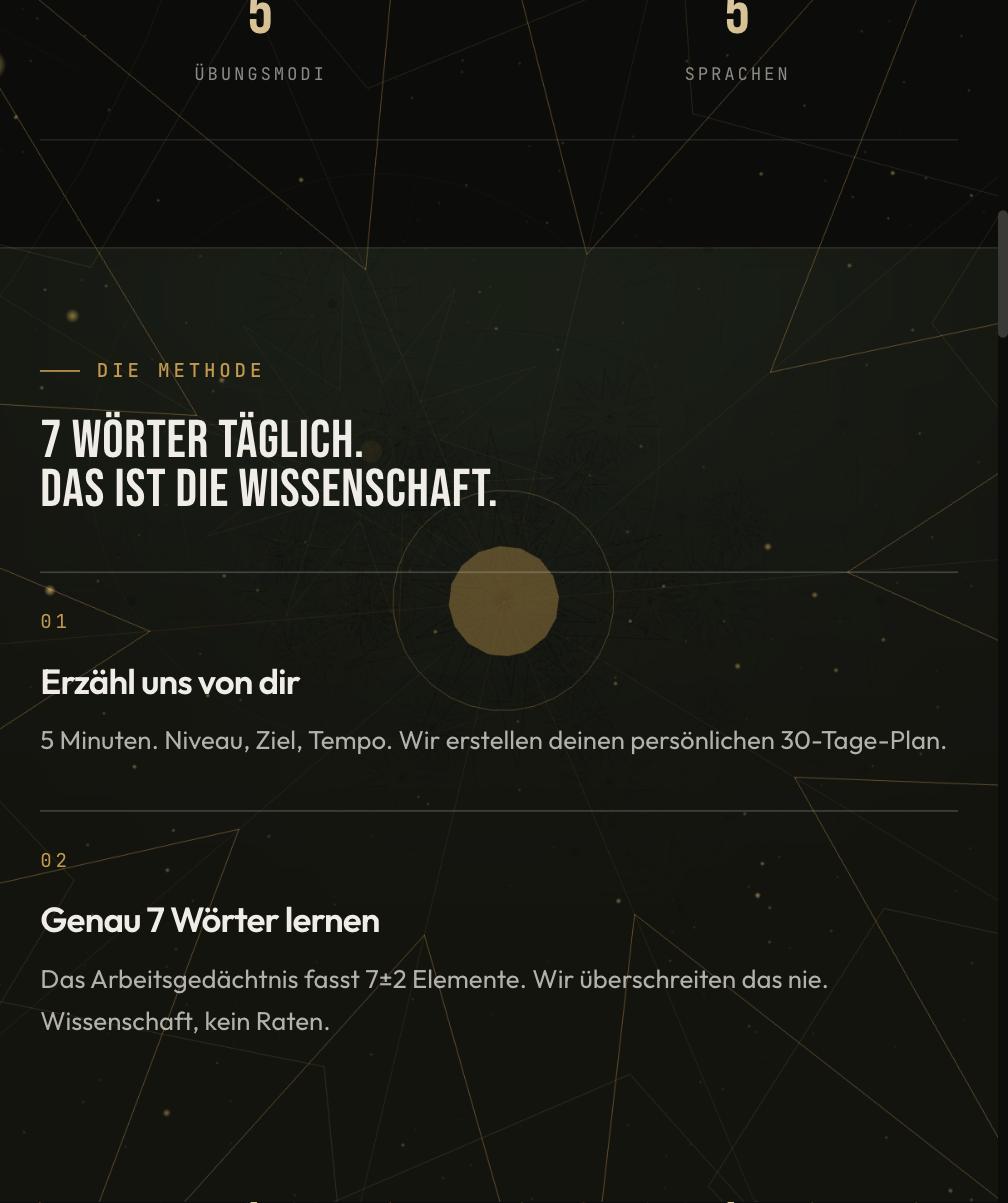
The part that makes the promise credible. Seven words a day is a number a person can keep, and spaced repetition is what turns them into vocabulary rather than a list read once. The method page exists to argue for that, because a learner who understands why the app works is a learner who comes back on day nine.
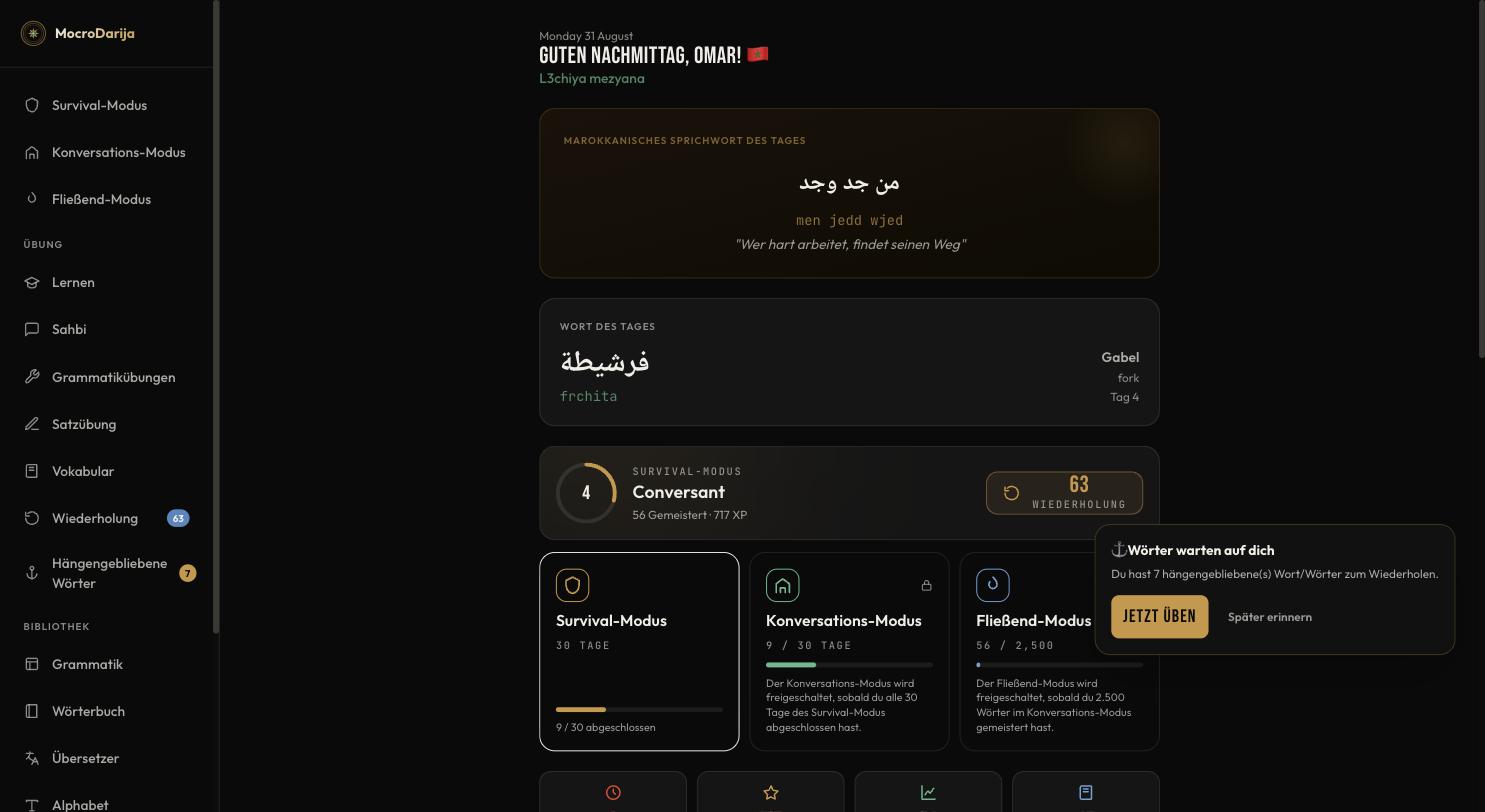
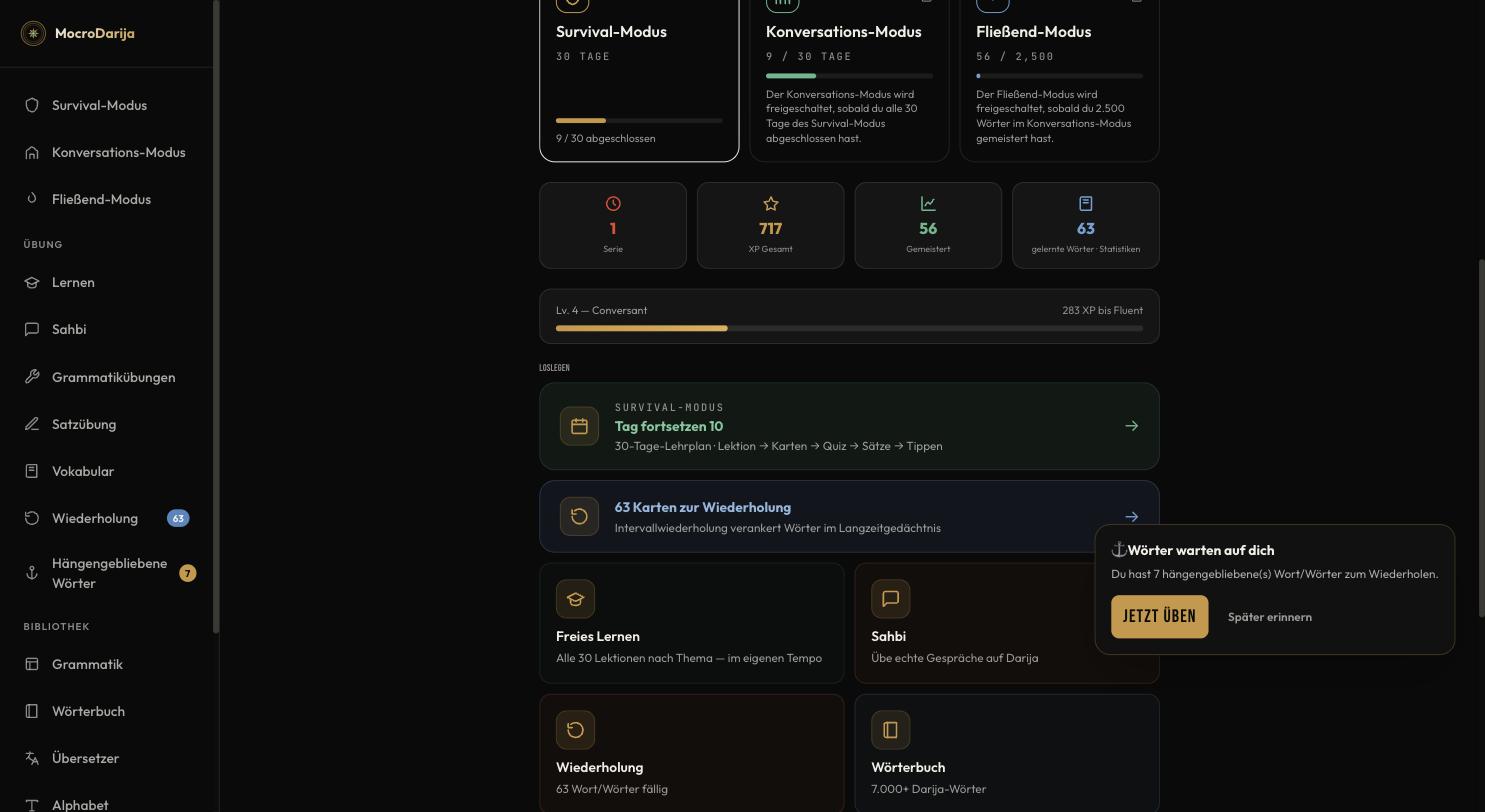
Behind the marketing pages is the actual product: an assessment that places a learner instead of starting everyone from zero, spaced-repetition flashcards, a dictionary, grammar, and listening and speaking practice — with a dashboard holding the streak together. Installed from the browser it sits on the home screen like any other app and opens directly at the dashboard, skipping the marketing site entirely.
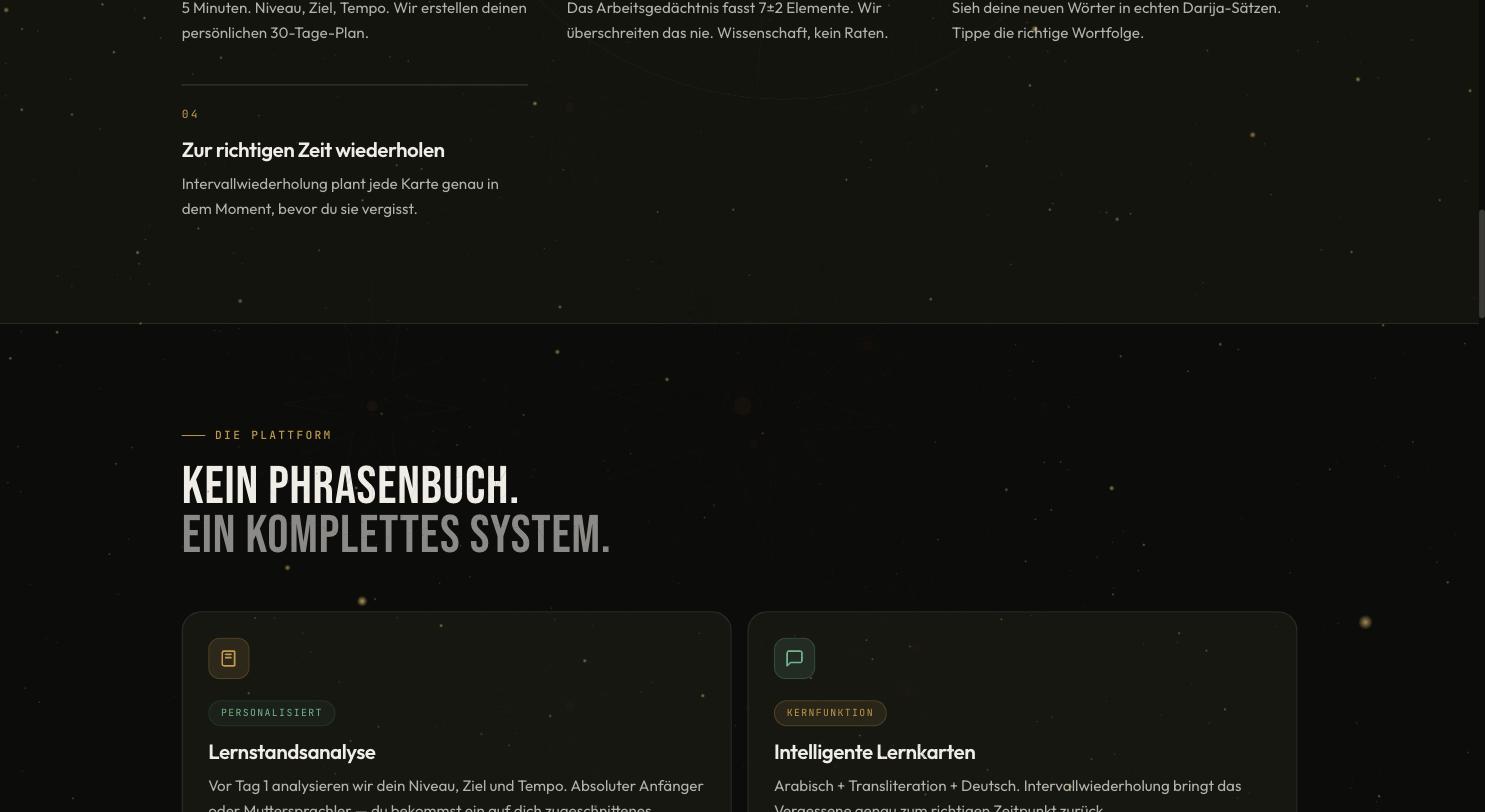
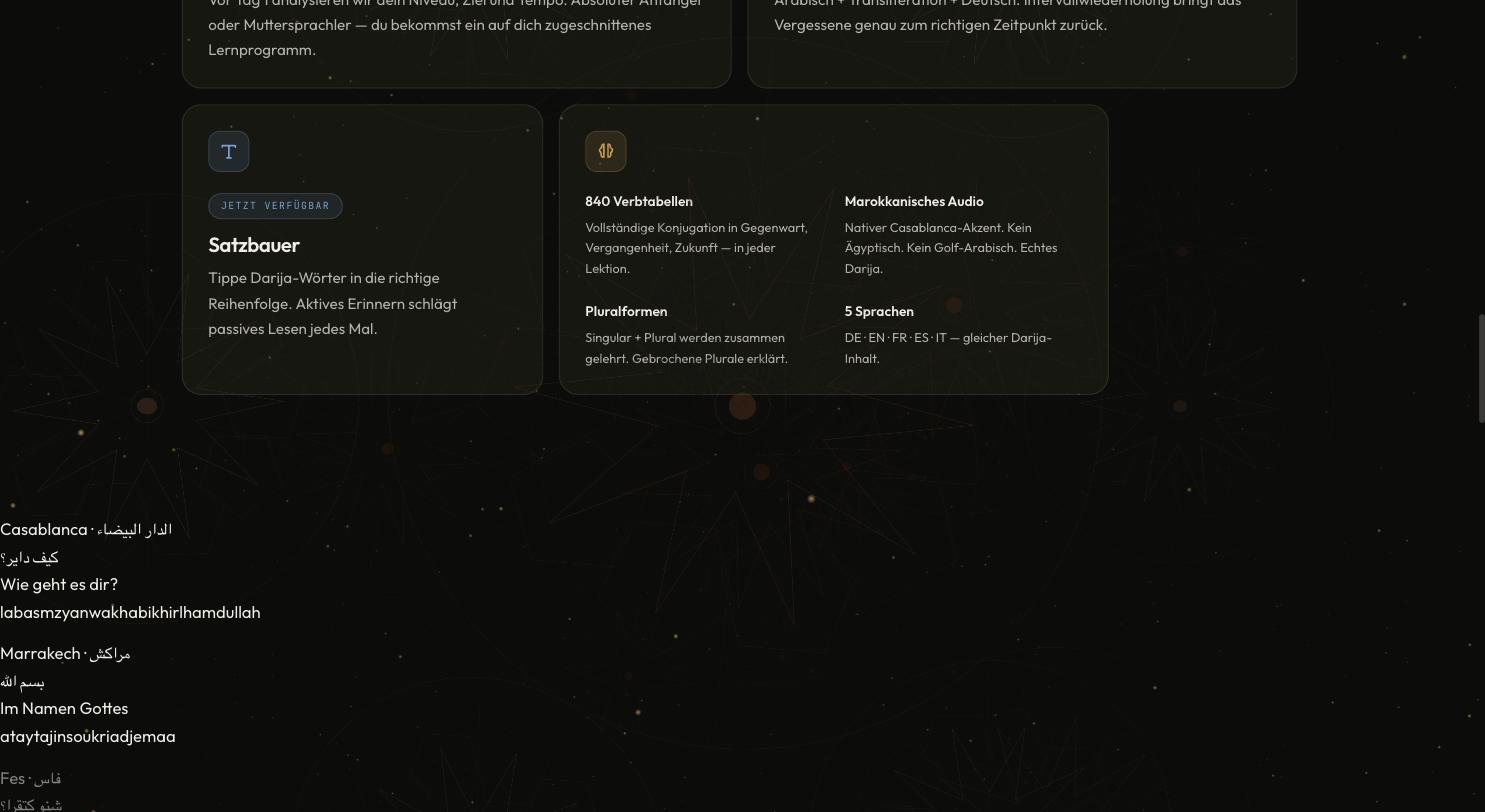
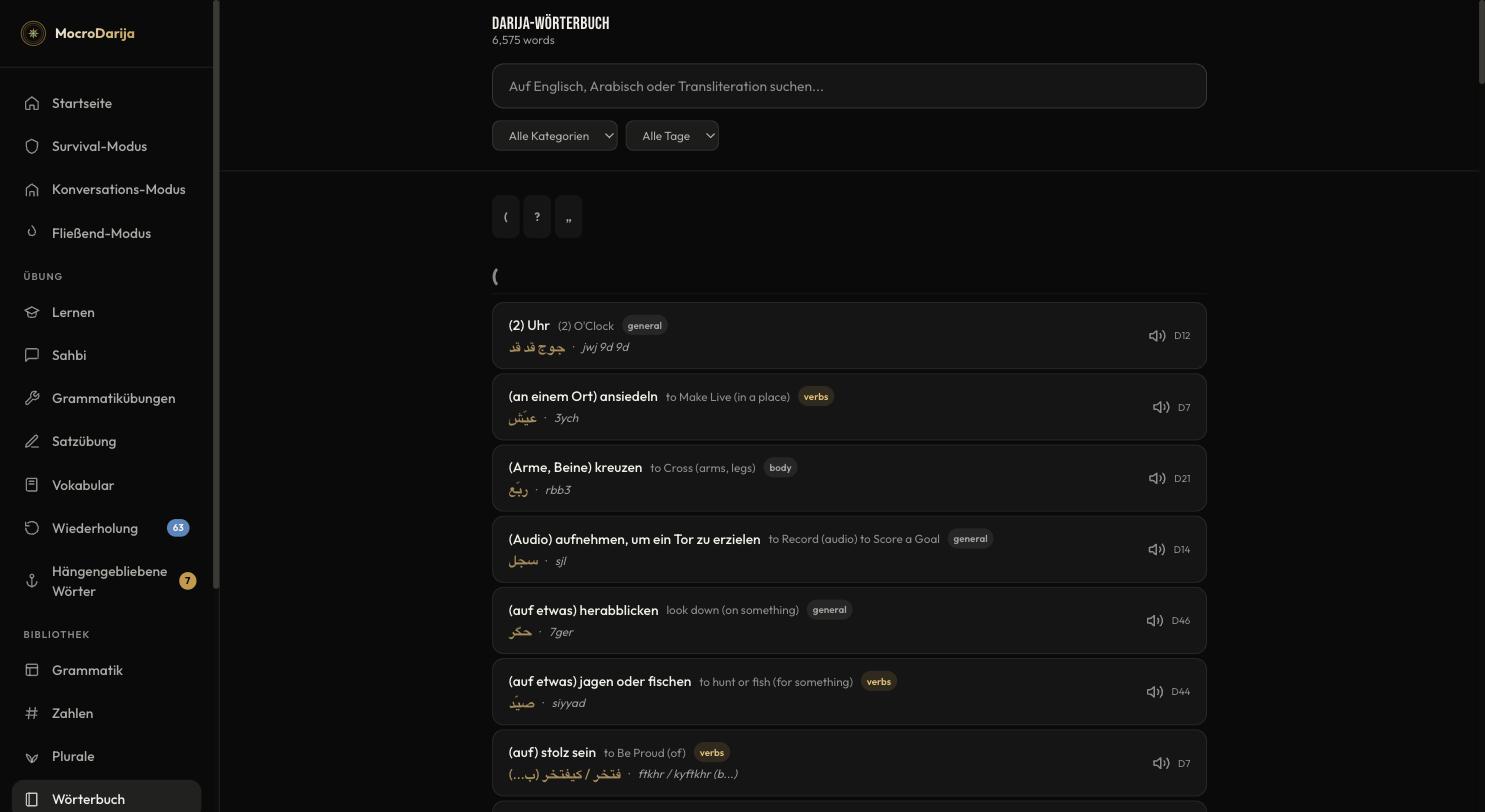
The product itself, which is where the 30 days actually happen. A dashboard that greets a learner by name and puts one word in front of them, a lesson list that runs day by day, lessons with the Arabic script and the transliteration side by side, flashcards that come back on schedule, a vocabulary tracker showing how well each word is really known, and a dictionary to look up anything the lessons have not reached yet.
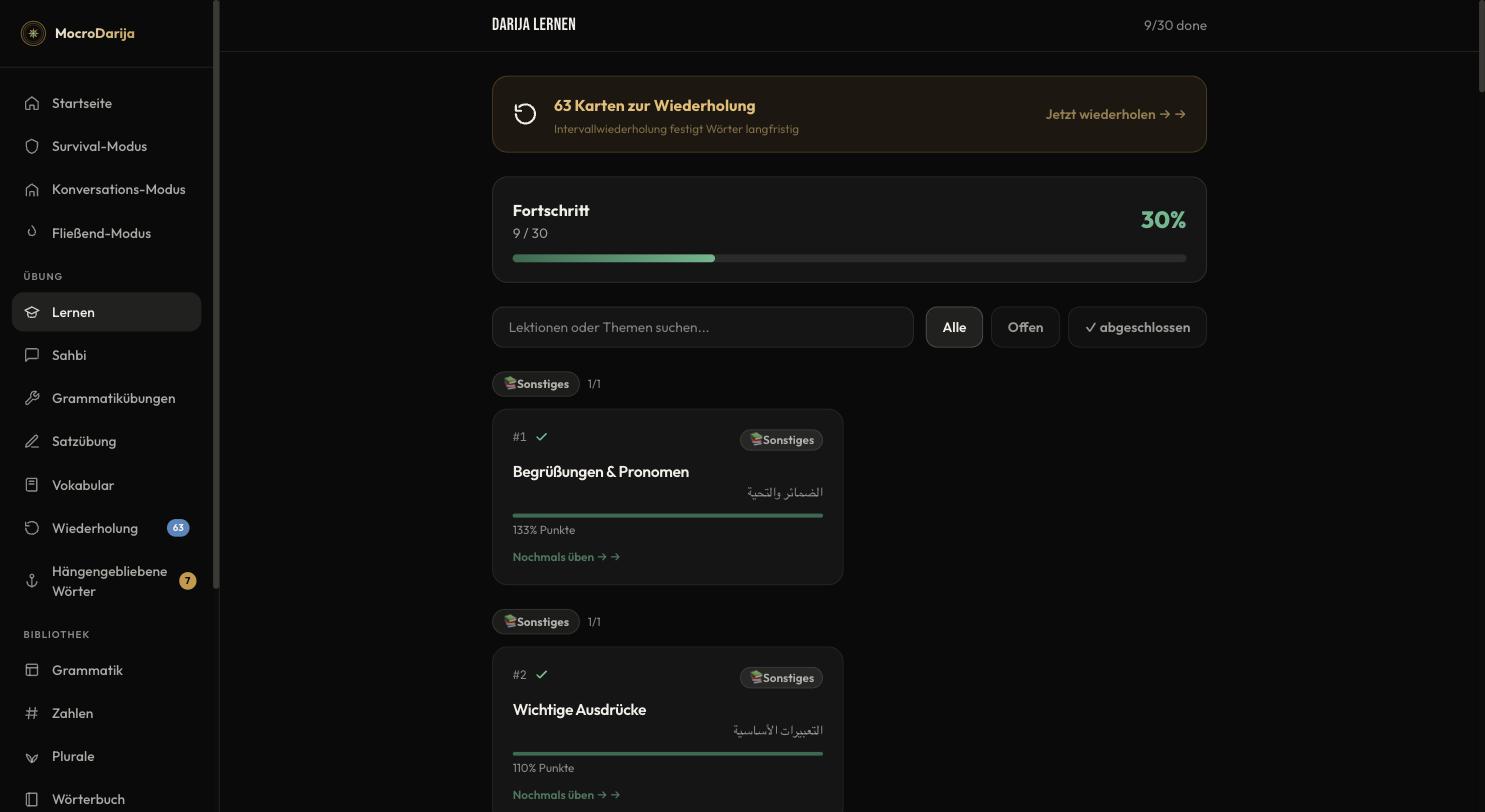
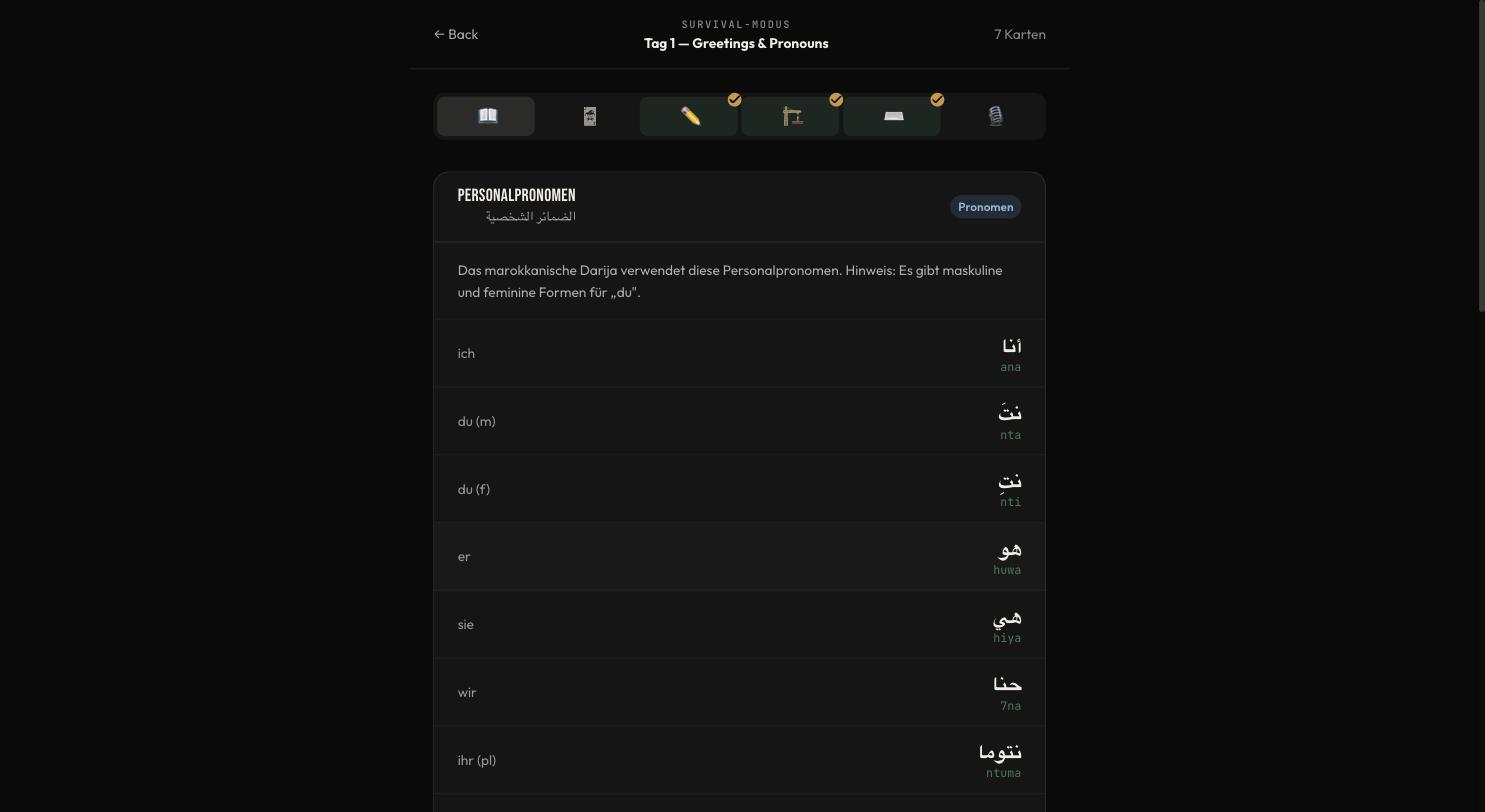
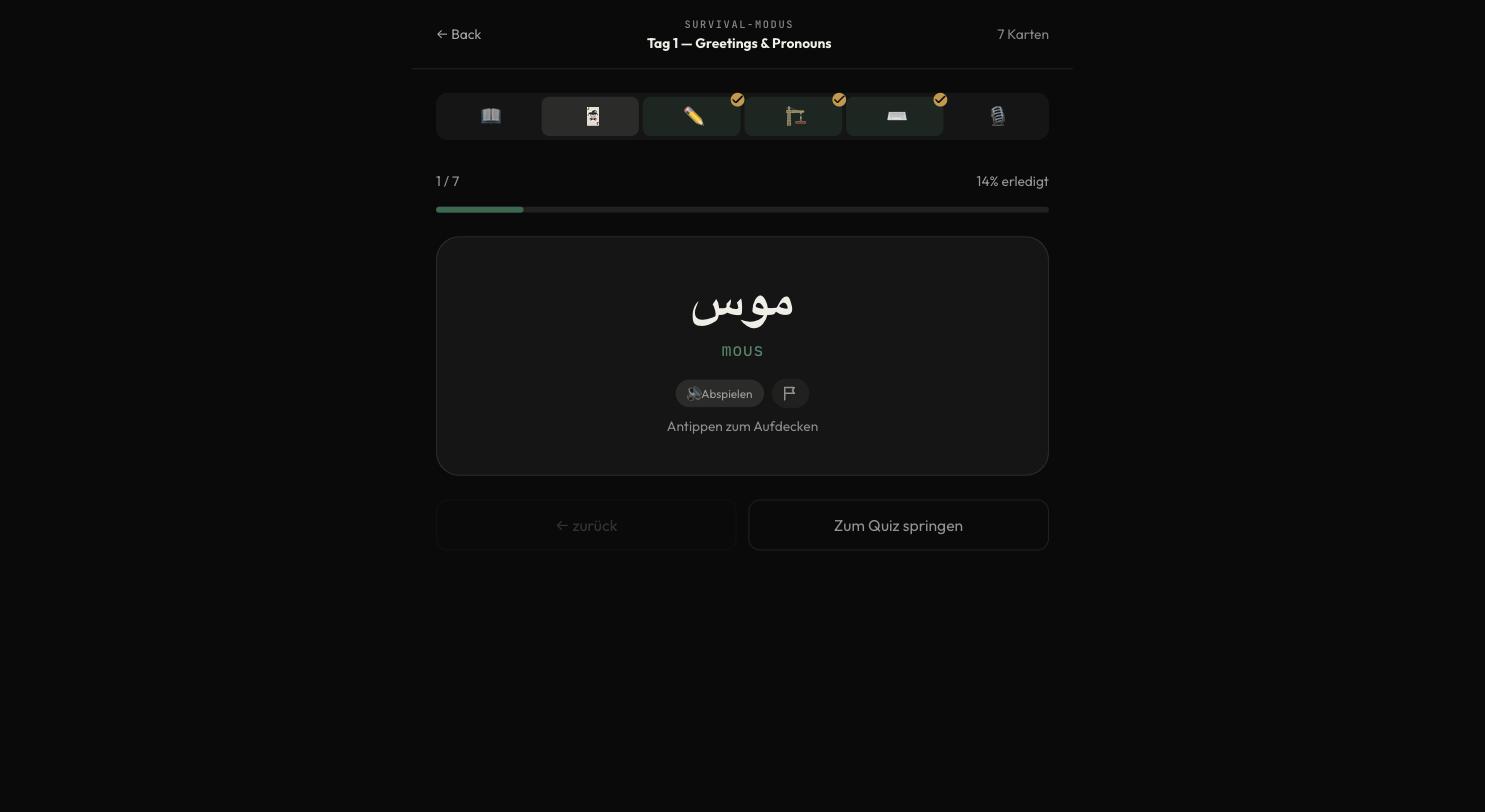
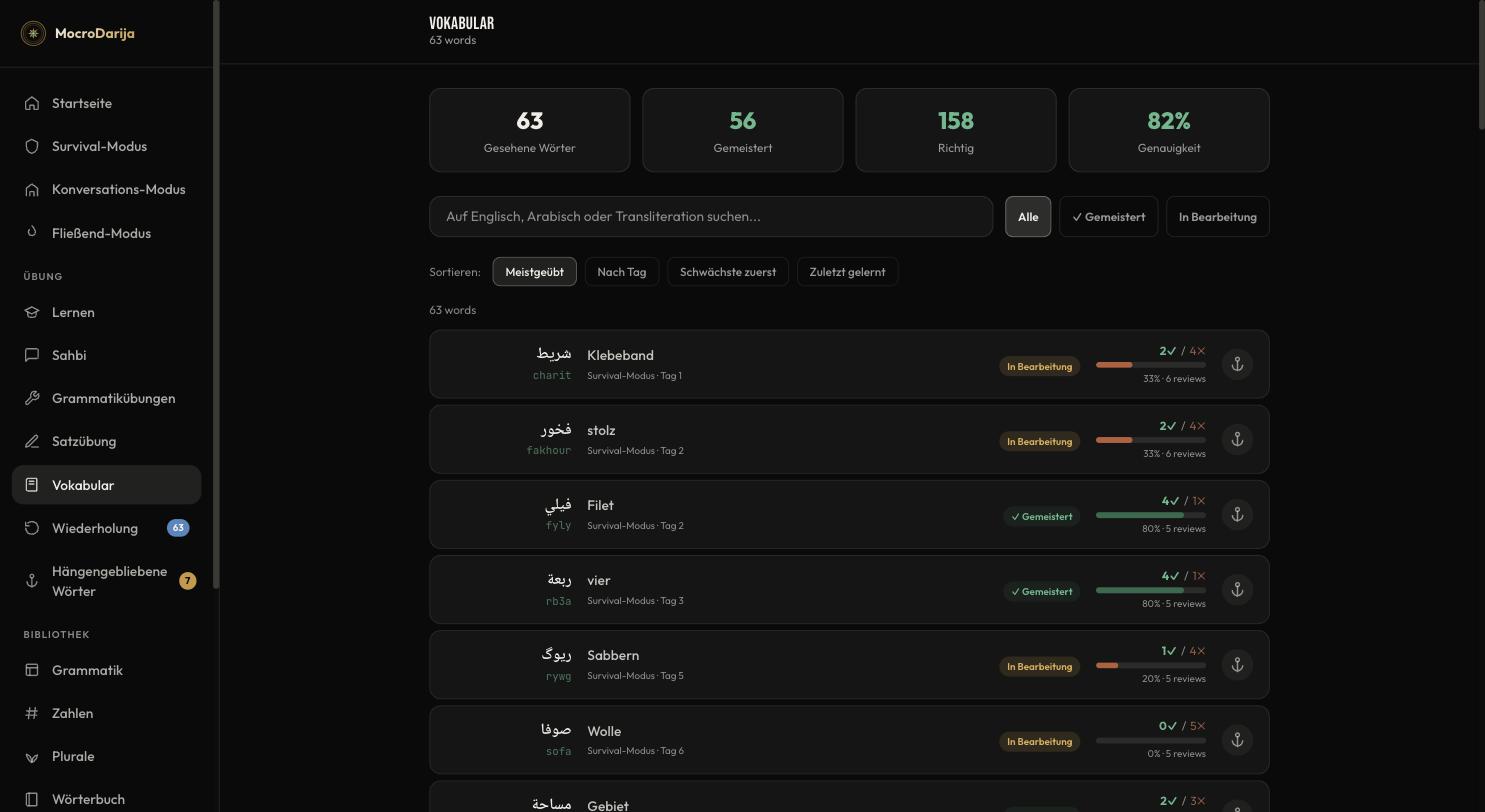
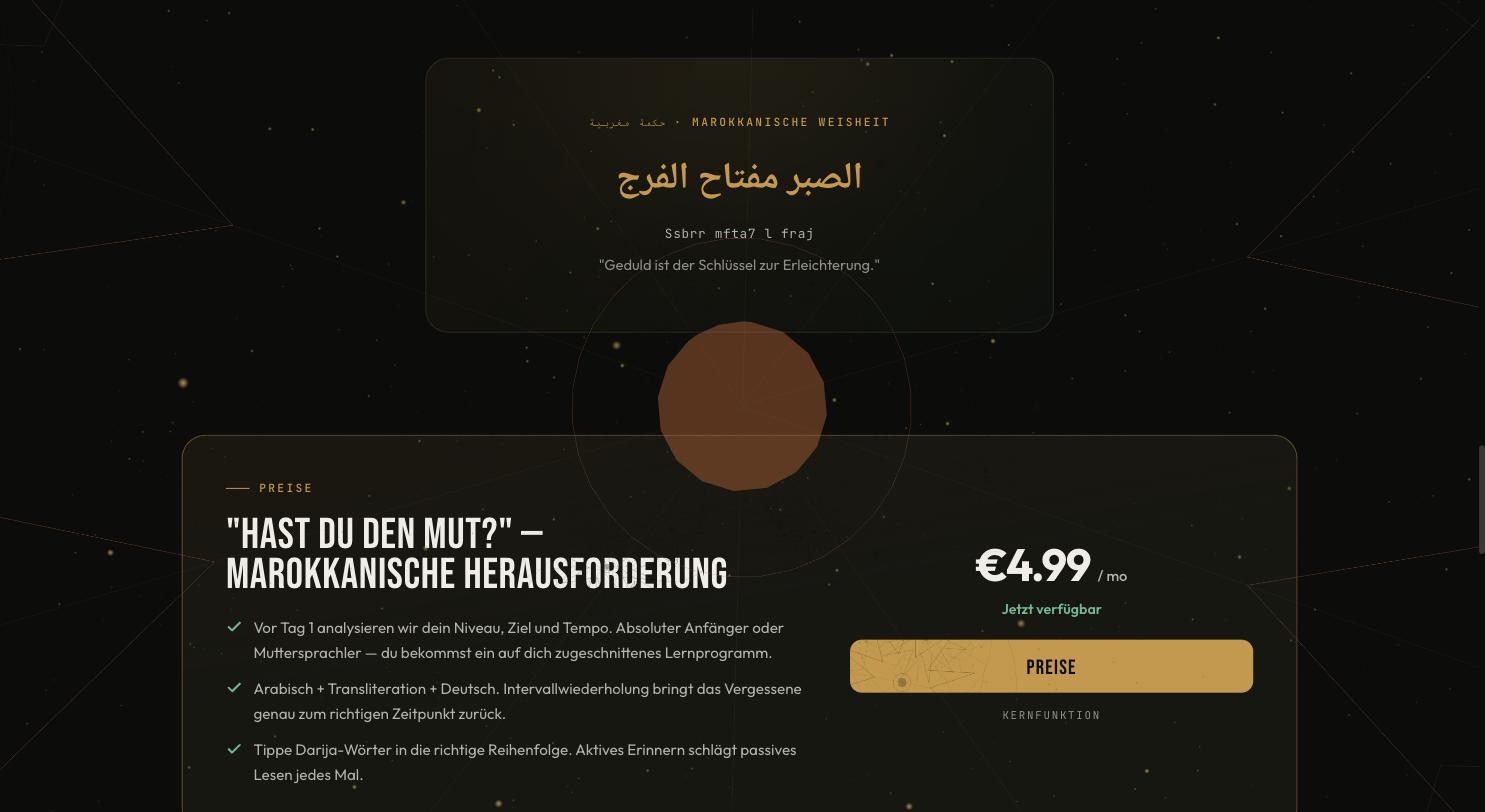
The funnel is deliberately unaggressive: start free, learn something real, and pay €4.99 only once the method has proved itself. Stripe handles checkout, and the free tier is the sales argument rather than a teaser — which is the only thing that works against an app the size of Duolingo.
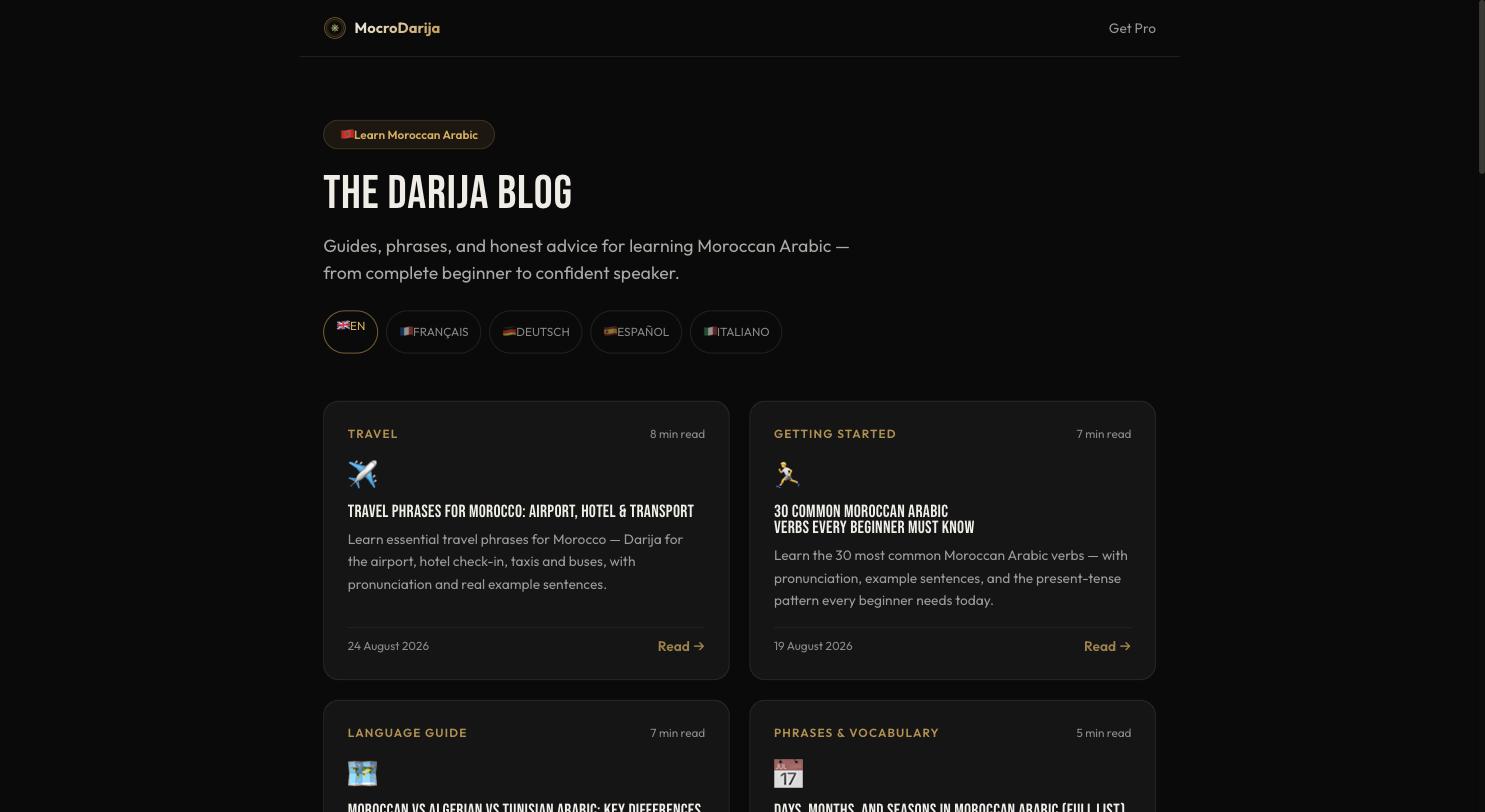
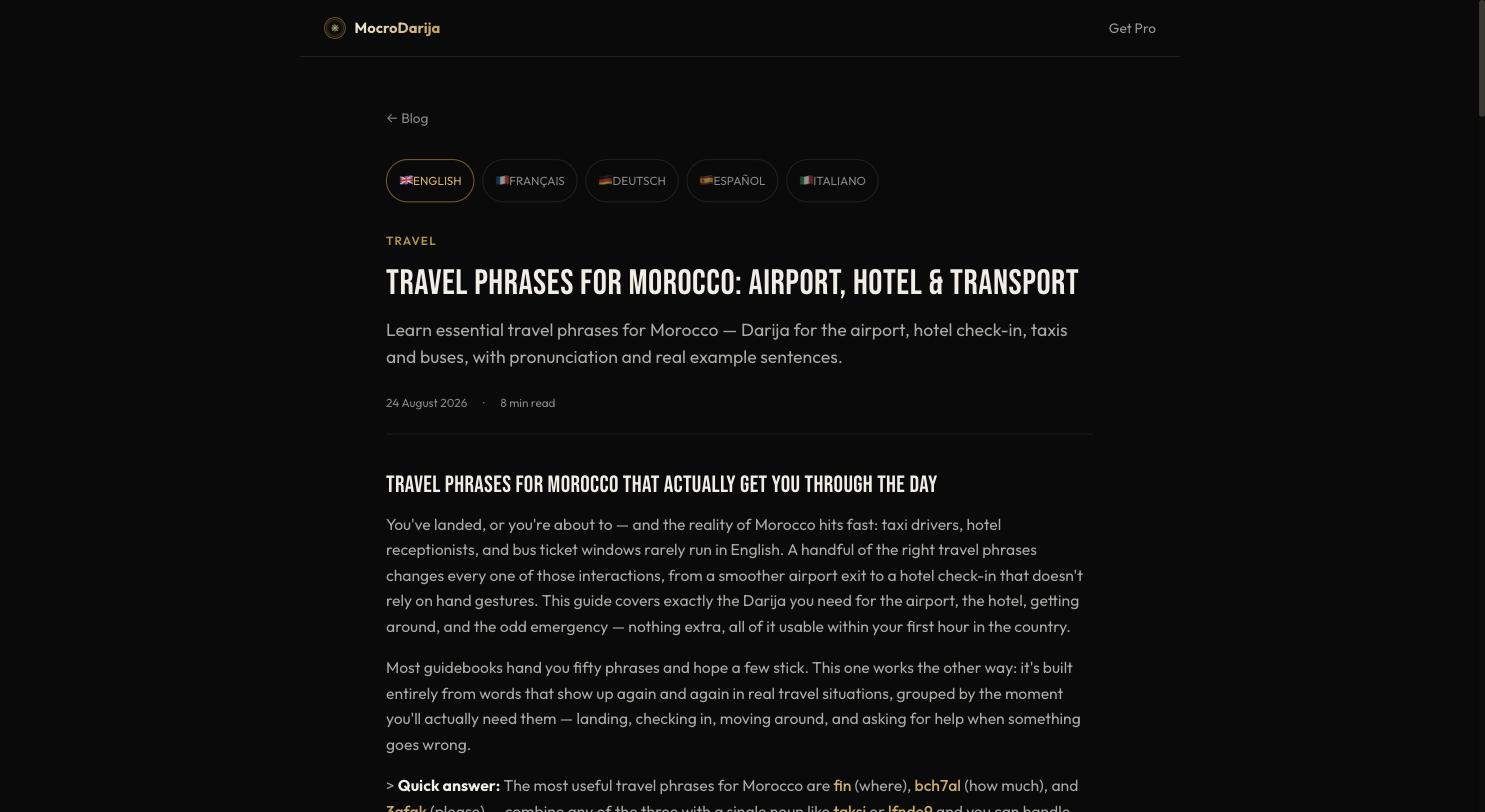
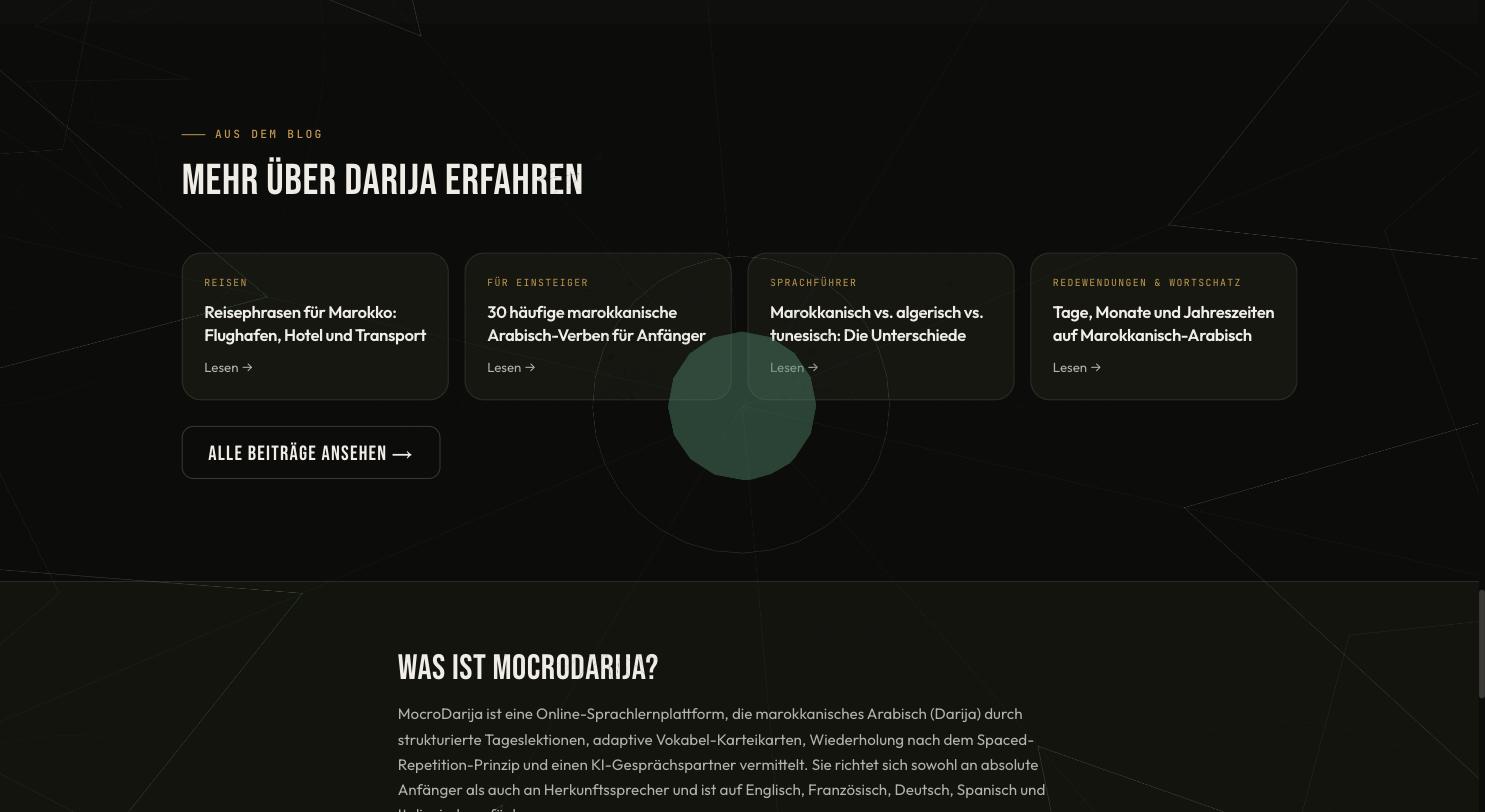
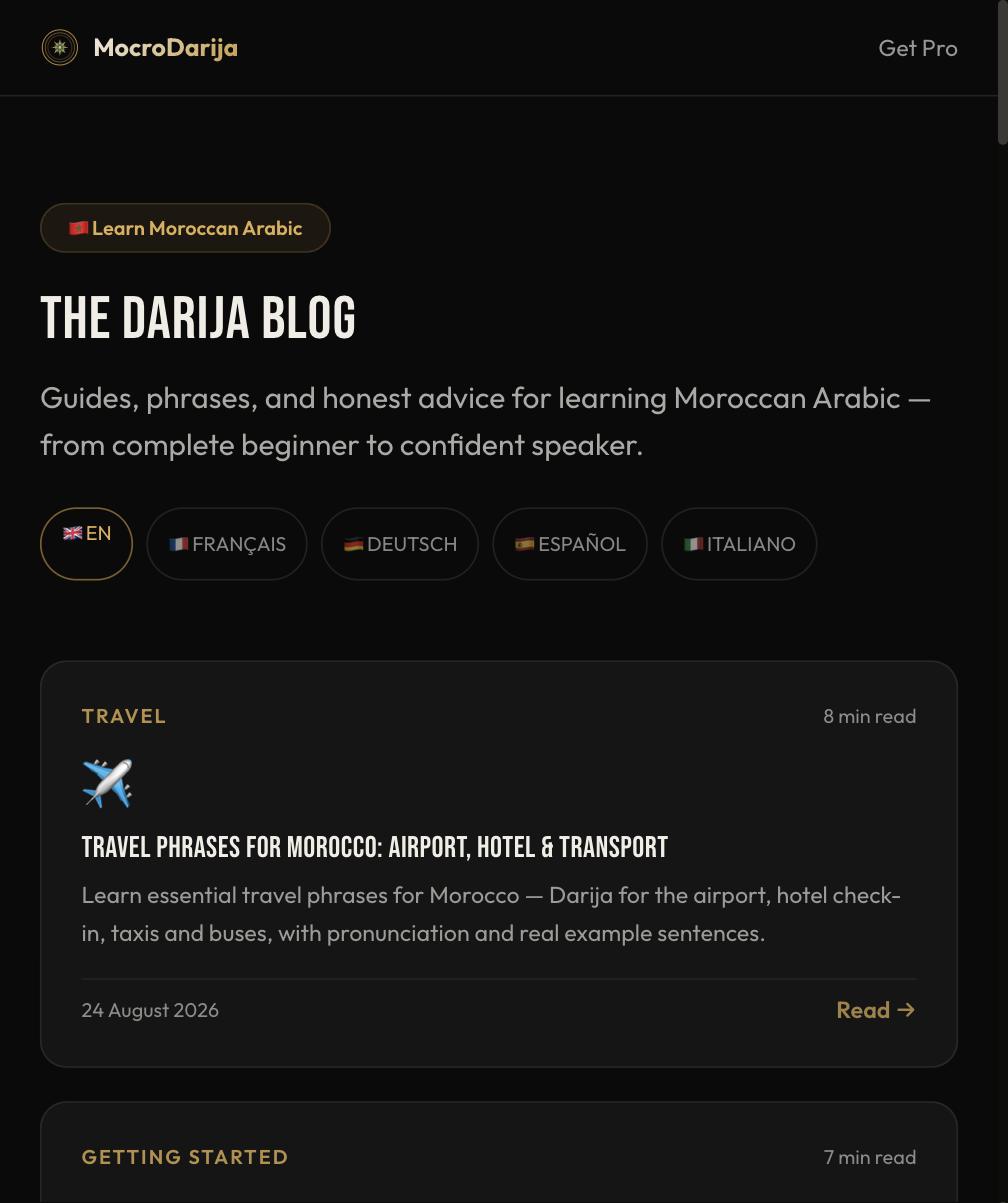
Most language apps have no answer for how anyone finds them. This one publishes in English, German, French, Spanish and Italian — travel phrases for Morocco, grammar explainers, the difference between Darija and the Arabic taught in schools — so a search in any of those five languages can land on the product. It is the growth engine, not a content afterthought.
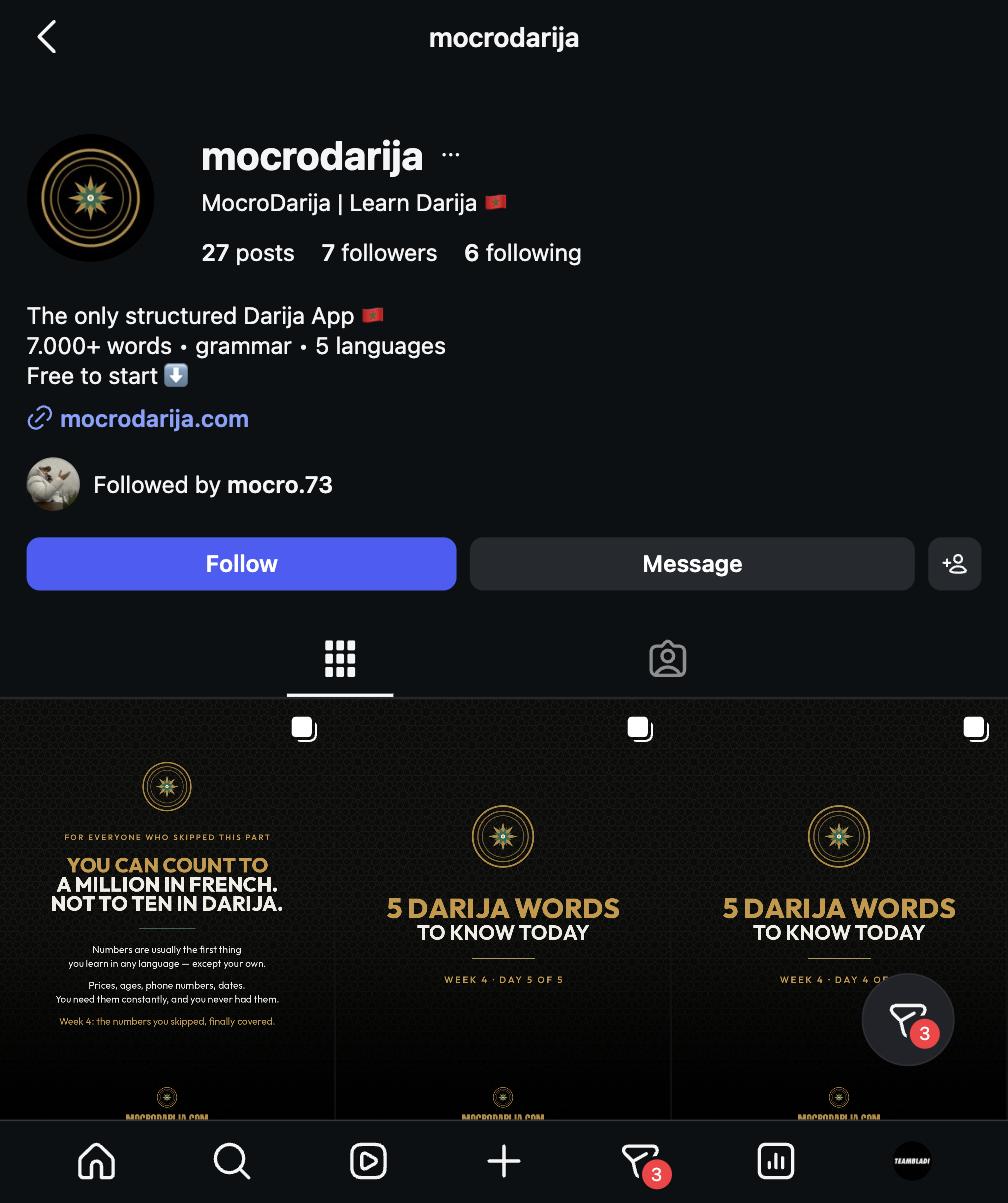
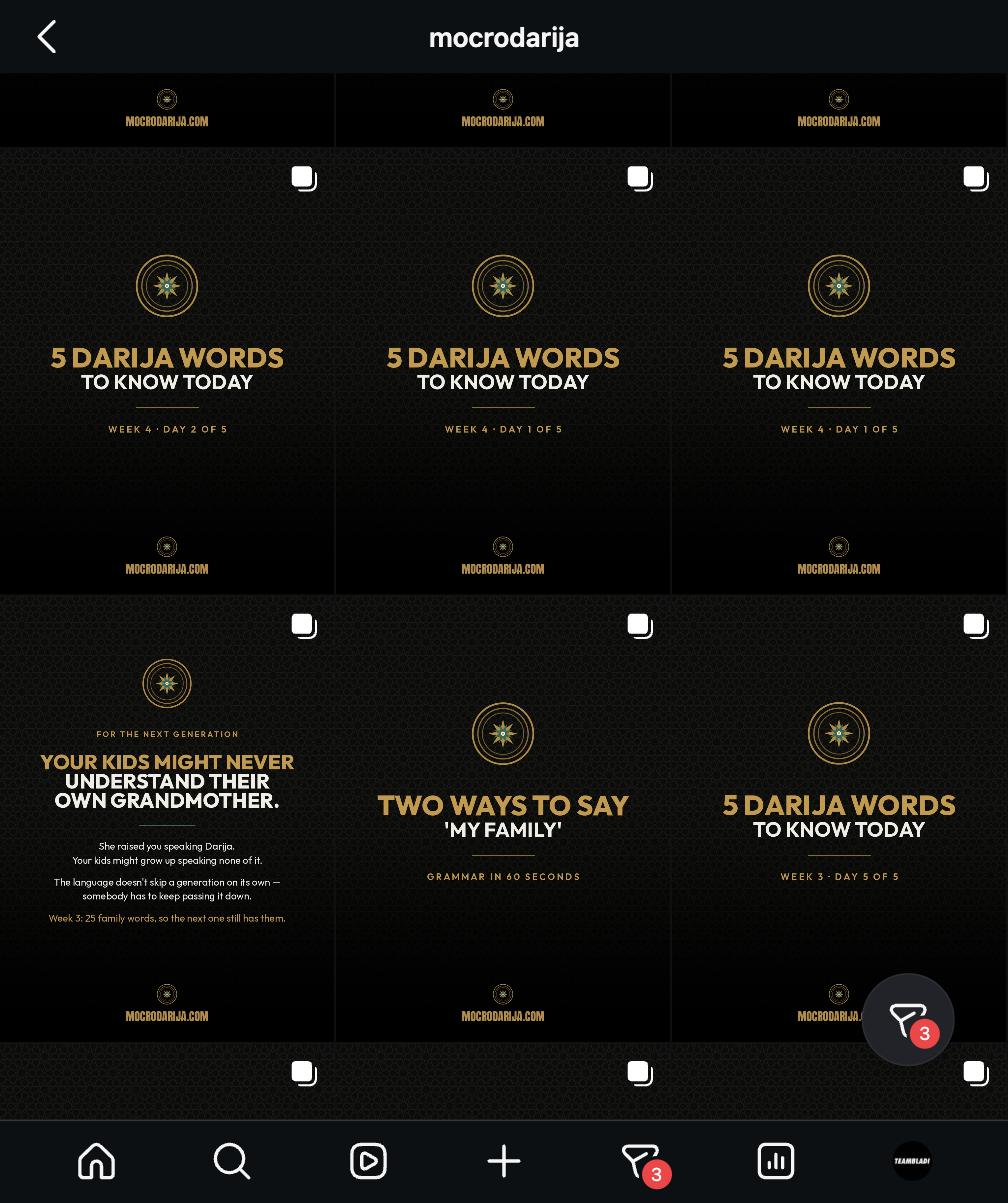
Instagram runs the same system in short form: one idea per post, five words to know today, two ways to say my family. A new account, built as a lesson series rather than a promotional feed — so every post is worth following for its own sake before it ever asks for anything.
Free website & SEO audit in your inbox within 48h — or book a call directly.